In the early days of my cancer diagnosis, I had trouble coping with my new reality. Not so unusual, I'm thinking. One of the ways I got through it was to pick and choose what I wanted to learn about and what I would choose to ignore. I always had it in the back of my head that, one day, I would read and learn more about this thing my body was doing.
So some people found it strange that I didn't always remember the name of my particular form of cancer, the names of my drugs or the statistics on survival. OK, that last one shouldn't surprise ANYONE! At the time, that was just fine with me. Knowing this stuff wasn't helping me launch a successful battle. I needed to know where I needed to be, who I was going to see, what I could expect for side effects, and how I should cope with any and all the changes I would be going through. And that worked. For a while.
Now I am in that year out limbo land, seeing my doctors and nurses less and dealing with cancer solo more. And, man, I have to tell you, I feel like an idiot. I feel like I don't know much about what happened this year and even less about what I can expect in the future. So I am taking baby steps towards doing the work of learning more about my cancer so that I can begin to form my own strategies for survival.
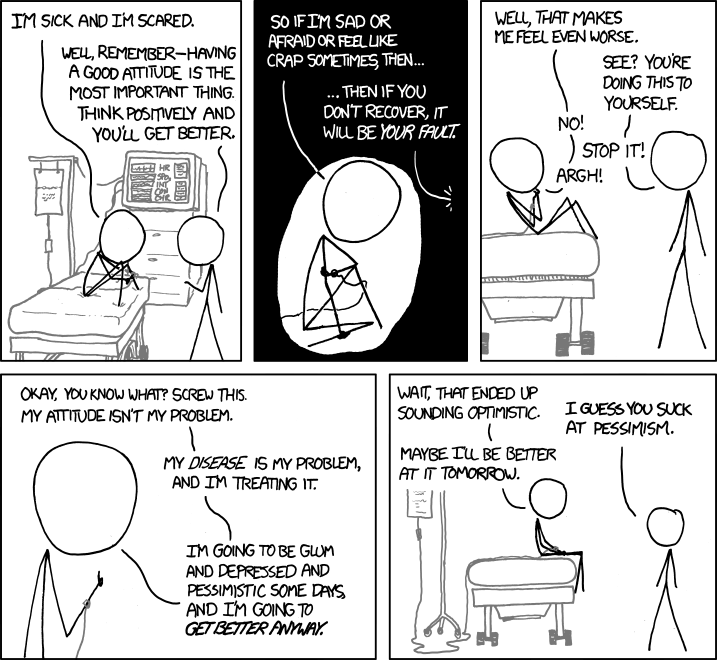
First up, depression. I noticed in a number of my intake forms that my health care folks were concerned about whether or not depression during treatment might be an issue for me. Well, I certainly had very blue days. And, I am going through a blue phase right now. So, today, I went online at the National Cancer Institute website to learn more about depression during cancer.
There was lots of really good information. I will include the overview below, but I highly recommend anyone with questions about depression during or after cancer treatment take a look at
their coverage of the topic. They discuss diagnosis, treatment, suicide, end of life and palliative issues, and depression in children.
It is officially time to start edumecating myself.
Overview
Depression is a disabling illness that affects about 15% to 25% of
cancer patients. It affects men and women with cancer equally. People who face a
diagnosis of cancer will experience different levels of
stress and emotional upset. Important issues in the life of any person with cancer may include the following:
- Fear of death.
- Interruption of life plans.
- Changes in body image and self-esteem.
- Changes in social role and lifestyle.
- Money and legal concerns.
Everyone who is diagnosed with cancer will react to these issues in different ways and may not experience serious depression or
anxiety.
Palliative care begins at diagnosis and continues throughout the patient's cancer care. Patients who are receiving
palliative care for cancer during the last 6 months of life may have frequent feelings of depression and anxiety, leading to a much lower
quality of life. During this time, patients in palliative care who suffer from depression report being more troubled about their physical
symptoms, relationships, and beliefs about life. Depressed
terminally ill patients have reported feelings of "being a burden" even when the actual amount of dependence on others is small.
Just as patients need to be evaluated for depression throughout their treatment, so do family caregivers. Caregivers have been found to experience a good deal more anxiety and depression than people who are not caring for patients with cancer. Children are also affected when a parent with cancer develops depression. A study of women with
breast cancer showed that children of depressed patients were the most likely to have emotional and behavioral problems themselves.
There are many misconceptions about cancer and how people
cope with it, such as the following:
- All people with cancer are depressed.
- Depression in a person with cancer is normal.
- Treatment does not help the depression.
- Everyone with cancer faces suffering and a painful death.
Sadness and
grief are normal reactions to the crises faced during cancer, and will be experienced at times by all people. Because sadness is common, it is important to distinguish between normal levels of sadness and depression. An important part of cancer care is the recognition of depression that needs to be treated. Some people may have more trouble adjusting to the diagnosis of cancer than others may. Major depression is not simply sadness or a blue mood. Major depression affects about 25% of patients and has common symptoms that can be diagnosed and treated. Symptoms of depression that are noticed when a patient is diagnosed with cancer may be a sign that the patient had a depression problem before the diagnosis of cancer.
All people will experience reactions of sadness and grief periodically throughout diagnosis, treatment, and survival of cancer. When people find out they have cancer, they often have feelings of disbelief,
denial, or despair. They may also experience difficulty sleeping, loss of
appetite, anxiety, and a preoccupation with worries about the future. These symptoms and fears usually lessen as a person adjusts to the diagnosis. Signs that a person has adjusted to the diagnosis include an ability to maintain active involvement in daily life activities, and an ability to continue functioning as spouse, parent, employee, or other roles by incorporating treatment into his or her schedule. If the family of a patient diagnosed with cancer is able to express feelings openly and solve problems effectively, both the patient and family members have less depression. Good communication within the family reduces anxiety. A person who cannot adjust to the diagnosis after a long period of time, and who loses interest in usual activities, may be depressed. Mild symptoms of depression can be
distressing and may be helped with
counseling. Even patients without obvious symptoms of depression may benefit from counseling; however, when symptoms are intense and long-lasting, or when they keep coming back, more intensive treatment is important.



 Posts


